How does our eye work?
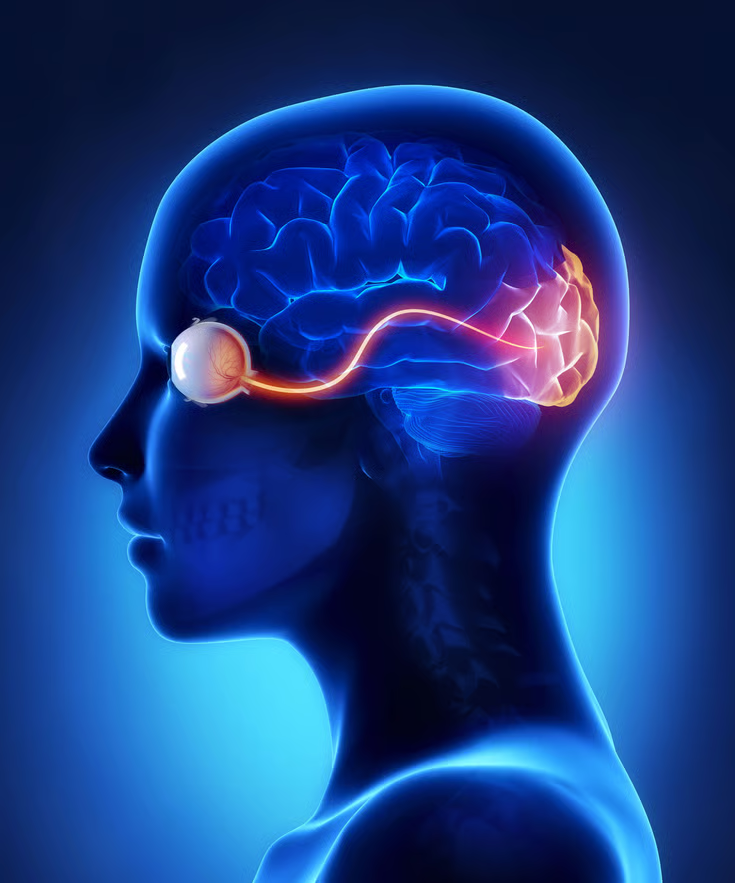
Our eye is like a camera that captures images of the outside world and sends them to our brain.
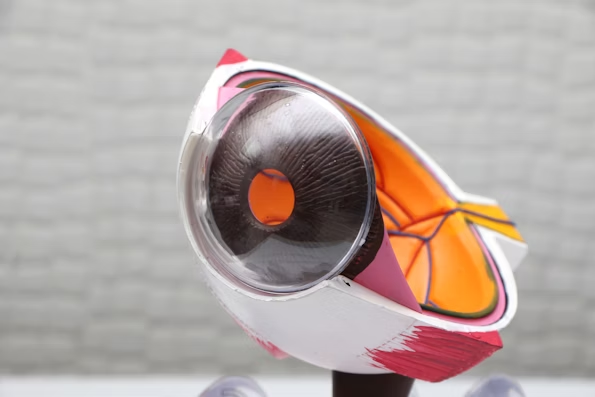

This section explains the basics so that you can better understand what happens in glaucoma
The main parts of the eye:
The white of the eye: the sclera:
This is the outer protective layer of the eye, which is hard and white in colour. It helps to maintain the shape of the eye.
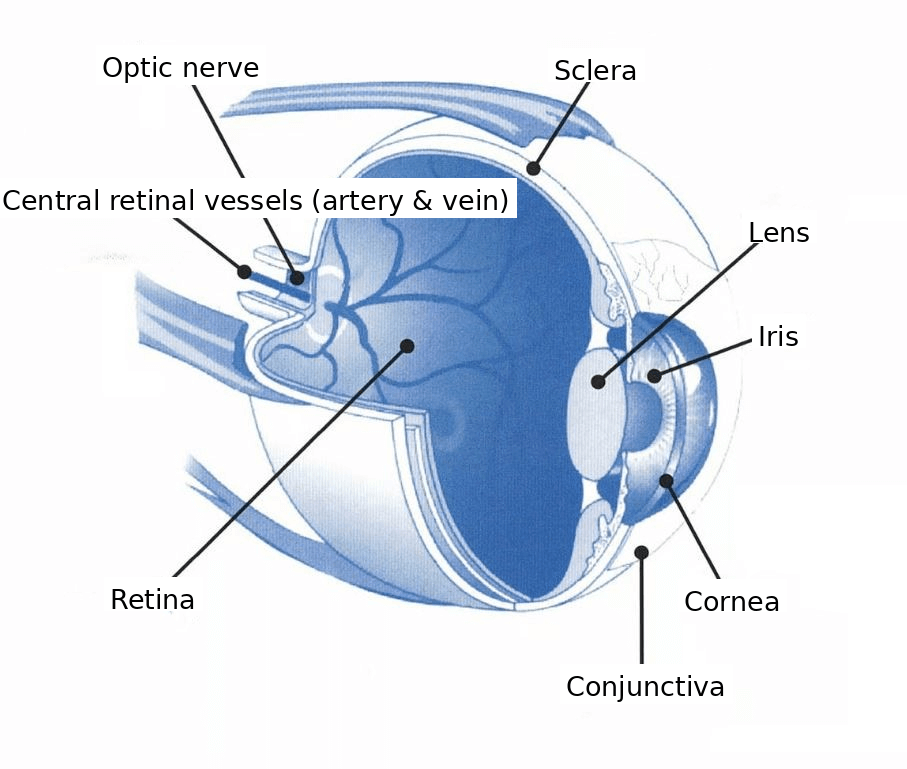
The cornea: This is the clear, transparent part at the front of the eye that acts like the lens of a camera, through which light enters.
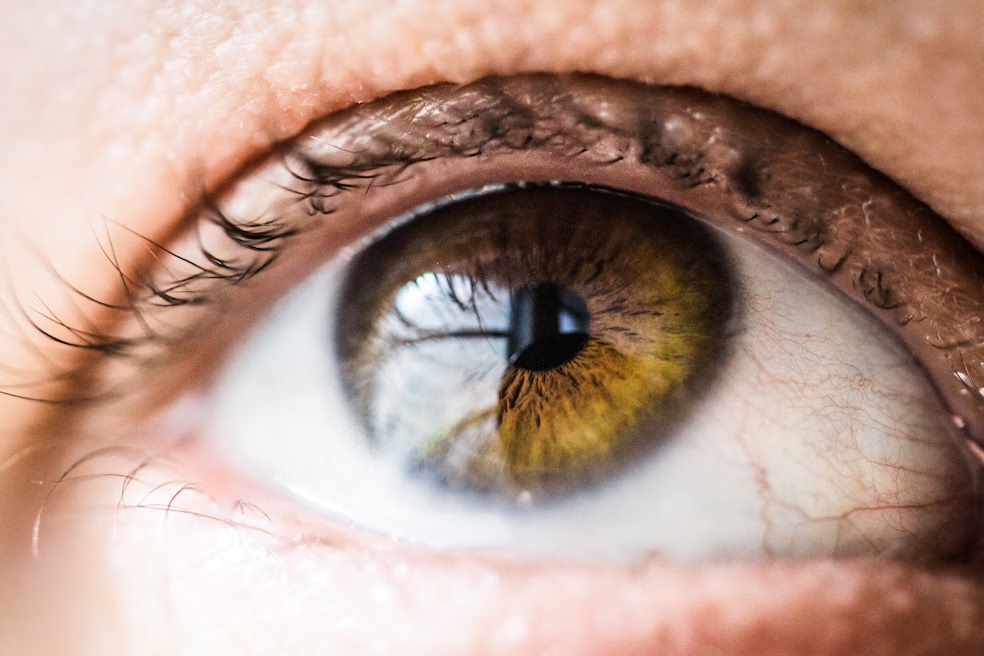
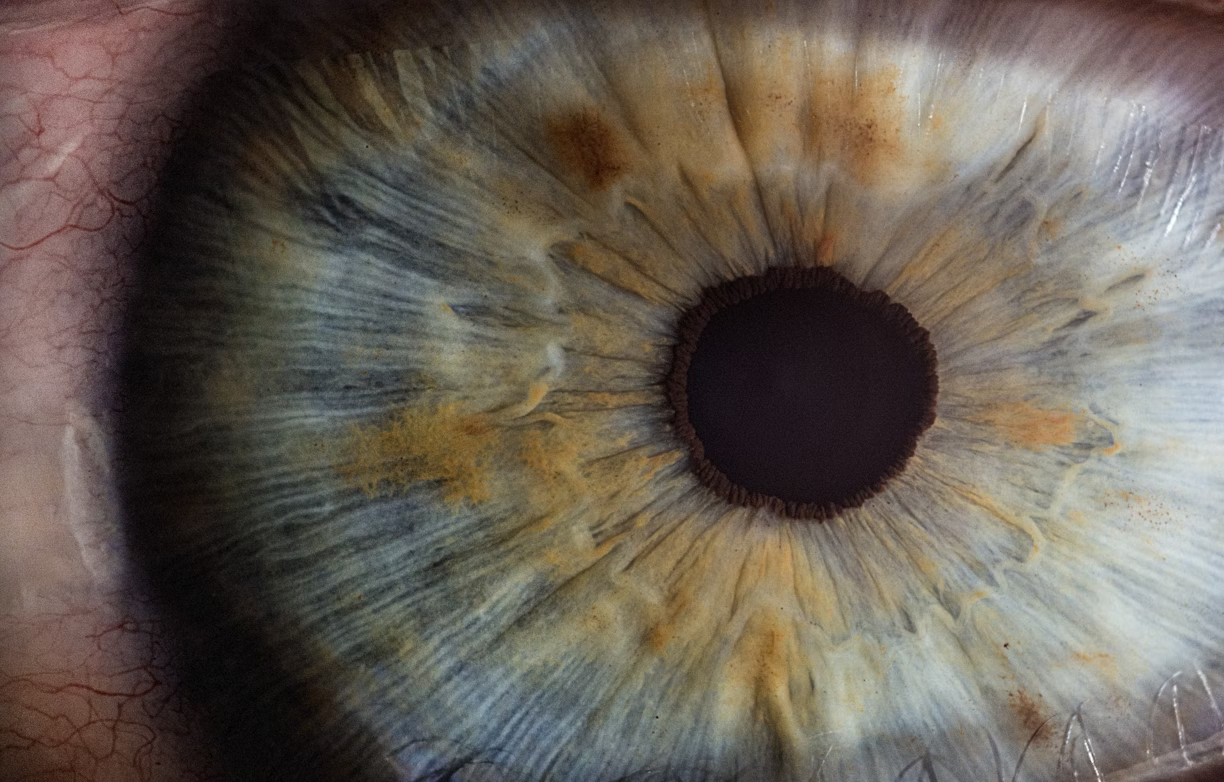
The iris (iris): This is the coloured part of the eye. The iris works like the diaphragm of a camera; it opens and closes to allow more or less light to pass through the pupil – the black hole in the centre of the iris.
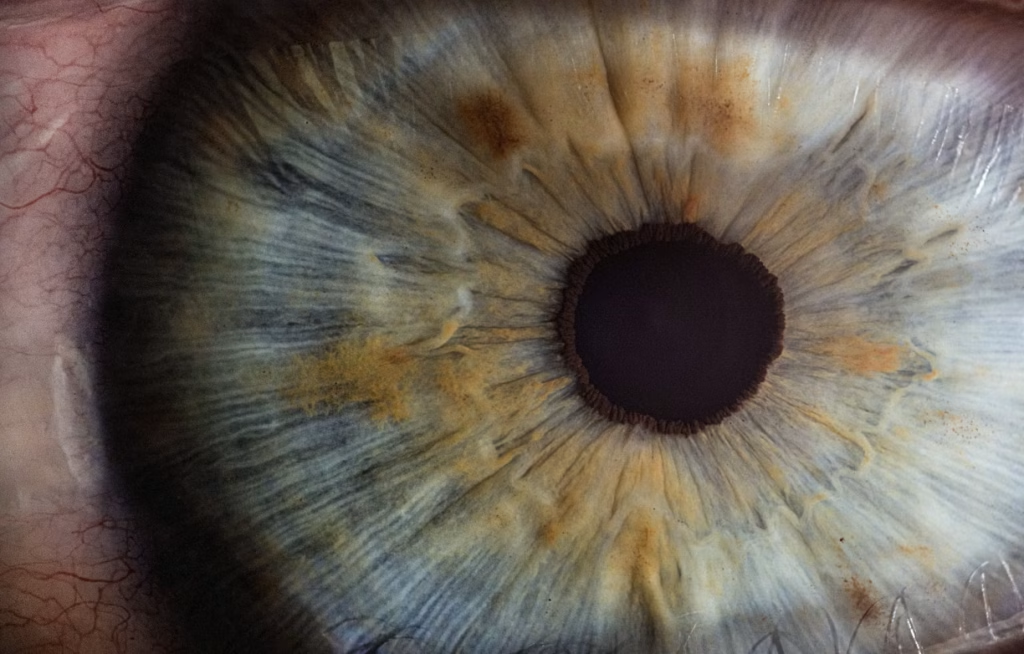
The lens: The lens is located directly behind the pupil. It focusses light on the back of the eye, similar to a camera lens, to produce clear images. It adjusts its shape in order to be able to see both near and distant objects clearly.
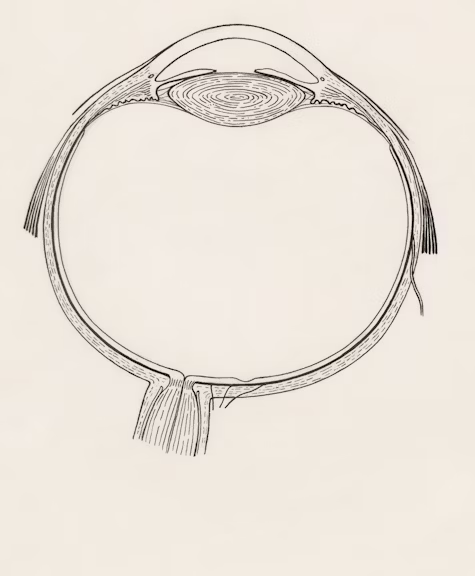
The retina – our ‘film’: The retina is like the film in a camera and is located at the back of the eye. It absorbs light and converts it into electrical signals that are sent via the optic nerve to the brain, where they are converted into the images we see.
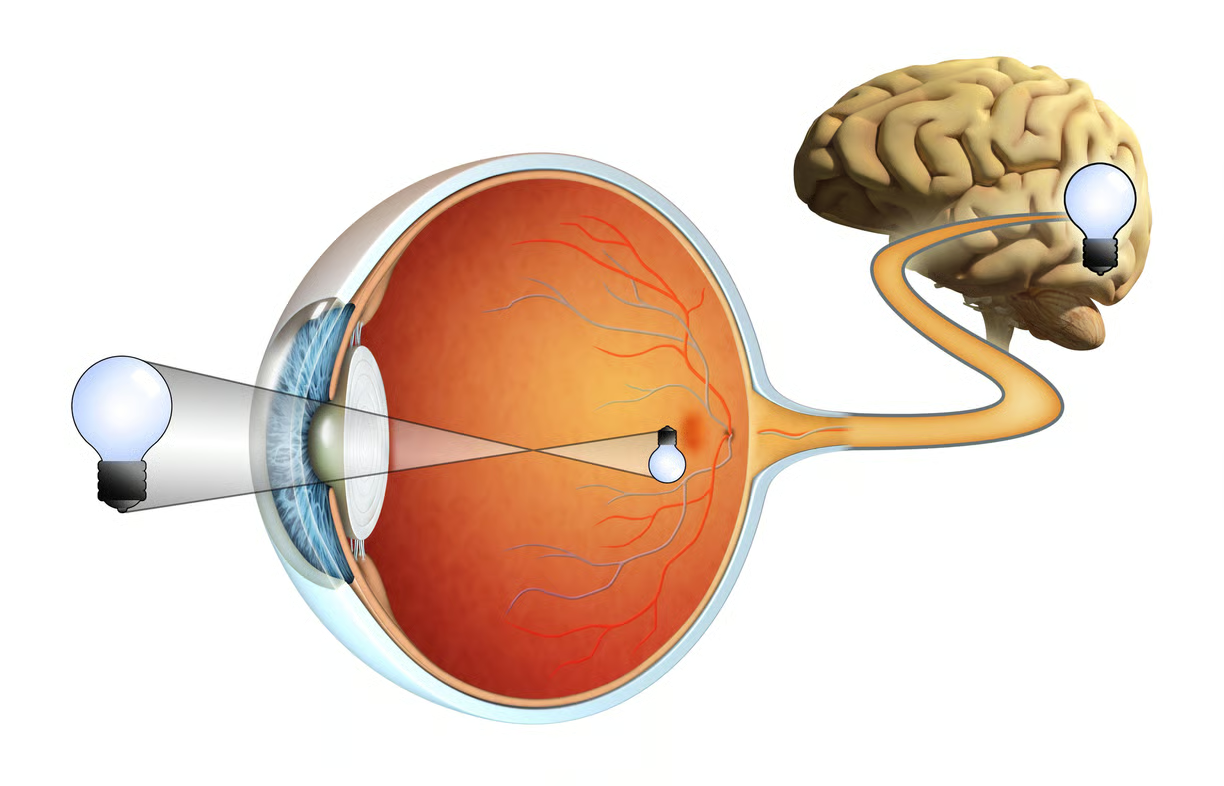
The optic nerve: At the back of the eye, the nerve fibres bundle together to form a cable, the optic nerve, which carries information from the eye to the brain. In glaucoma, this nerve is damaged, which can impair vision.
What is the aqueous humour?
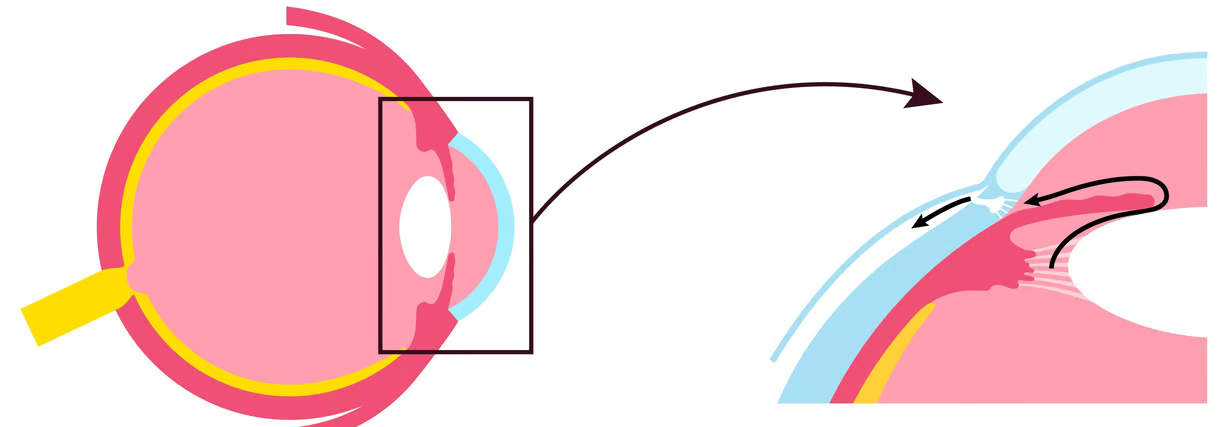
The eye contains a clear fluid called aqueous humour, which helps to keep the eye healthy and the lens and cornea clear. It circulates in the anterior chamber of the eye, a space between the cornea and the iris. A normal flow of aqueous humour is important to keep the pressure in the eye at a healthy level. Problems with the outflow of aqueous humour can lead to high eye pressure and glaucoma.
Working with your doctor:
It is very important that you have regular check-ups with your ophthalmologist to monitor the health of your eyes and detect problems at an early stage