Cause of glaucoma
Intraocular pressure and glaucoma:
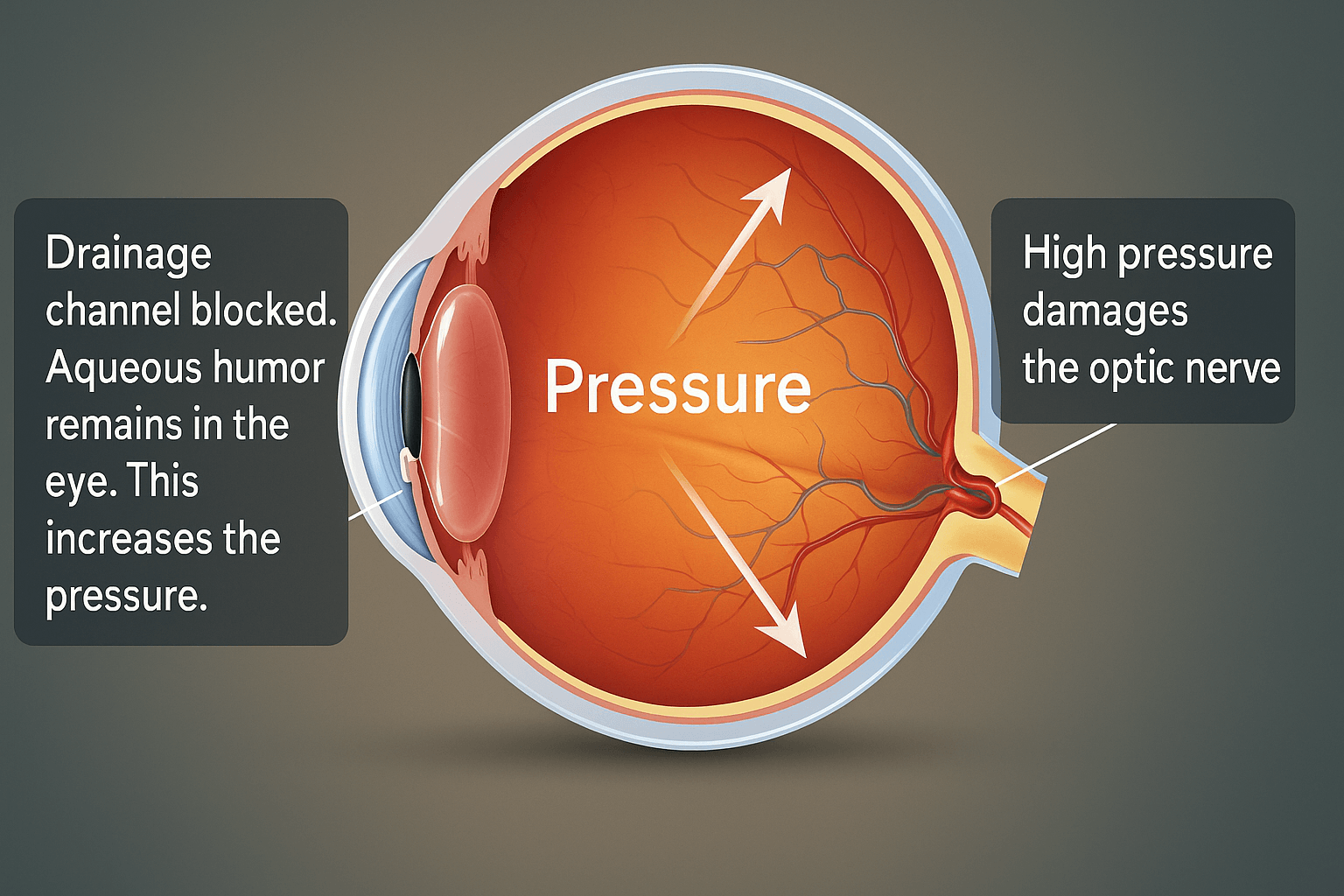
Glaucoma can be caused by excessive pressure in the eye. This usually happens when the aqueous humour, a clear fluid that nourishes the eye, cannot drain properly.
Think of it like a blocked drain, which causes the water to back up and the pressure in the pipe to rise.
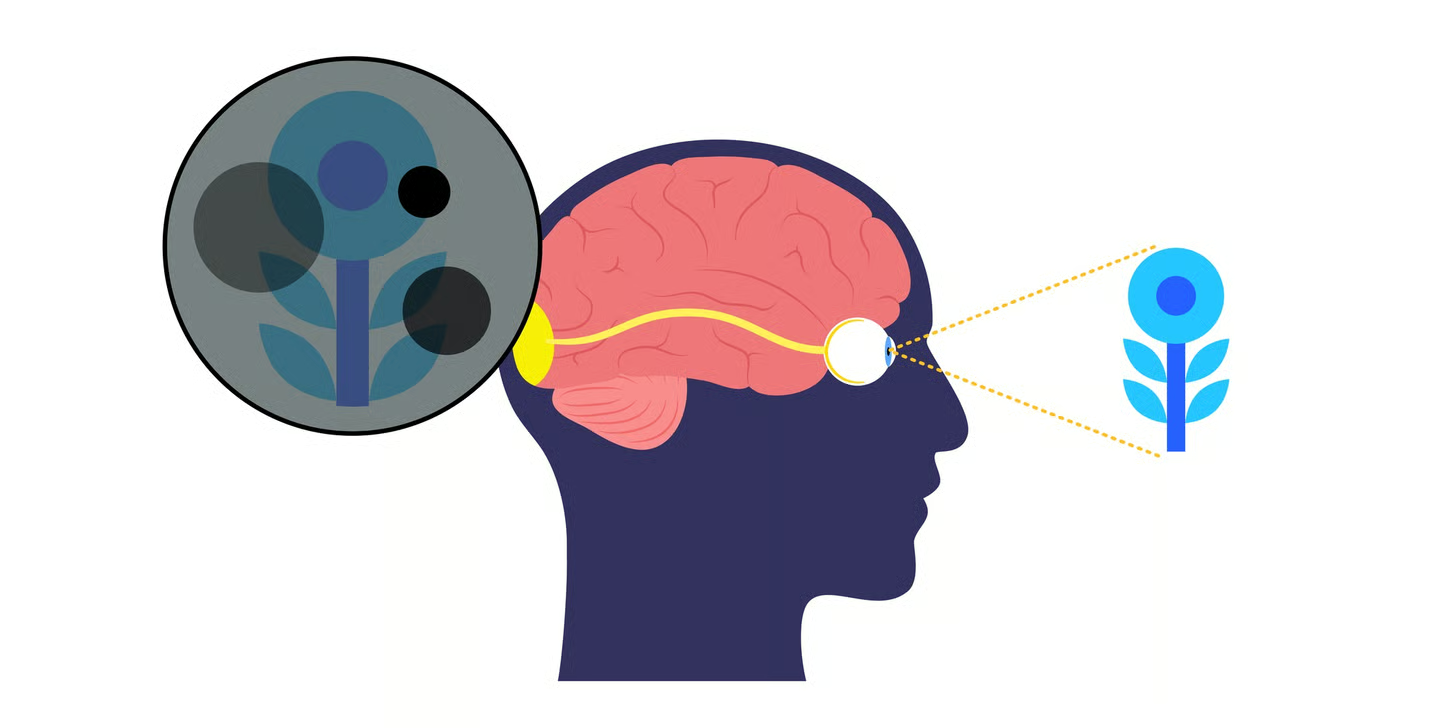
The situation is similar in the eye: if the pressure becomes too high, this can damage the optic nerve, which transmits images from the eye to the brain.
Normal tension glaucoma:
There is also a form of glaucoma in which the intraocular pressure is normal.
Doctors suspect that the blood supply to the eye is not optimal. A good blood supply is crucial to keep all parts of the eye healthy, especially the optic nerve.

Circulatory problems can affect different parts of the body, including the optic nerve, which is particularly relevant in normal tension glaucoma. The heart is responsible for pumping blood around the body, while the blood vessels control how much blood each organ receives.
Incorrect regulation can damage the optic nerve. In general, it is important to optimise the cardiovascular system. Work with your GP to optimise your blood pressure, blood sugar and blood lipid levels .
What happens if the optic nerve is damaged?
The optic nerve connects the eye to the brain and consists of many nerve fibres. If these fibres are damaged, people begin to see less well, initially in the outer areas of their field of vision. Over time, this can also affect central vision and, in the worst case, lead to blindness.